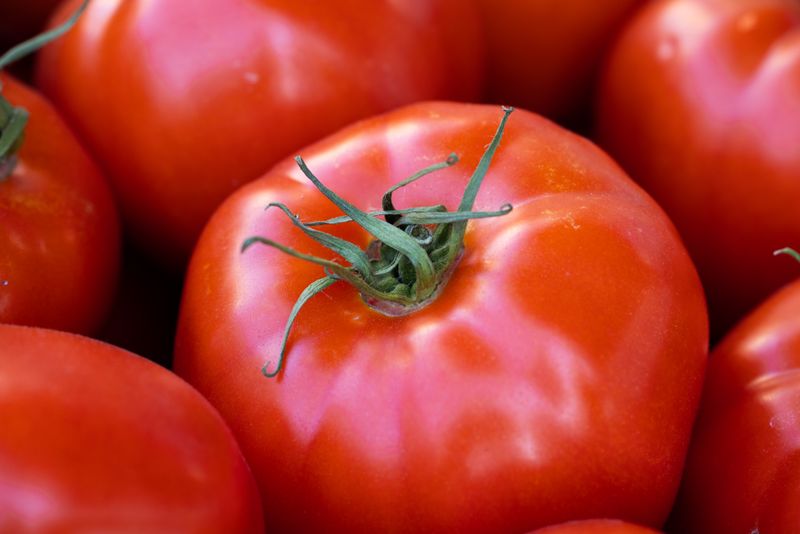
Can Babies Eat Tomatoes?
By Sarah, founder of SowAndSpoon · Reviewed April 2026
Yes, safe from 6 months
Choking risk: medium
Cherry tomatoes are a serious choking hazard and must be quartered lengthwise. Large tomato slices or cooked tomato are low risk. Always cut small round tomatoes before serving.
Not a common allergen
Babies can eat tomatoes from 6 months. Tomatoes provide vitamin C, potassium, lycopene (a powerful antioxidant), and vitamin A. Cooked tomatoes actually have more bioavailable lycopene than raw ones.
Flavor guide
Raw ripe tomatoes are juicy, bright, and sweet-tart with a fresh acidity and thin skin that can be slippery. Cooking concentrates the sugars, deepens the umami, and softens the flesh into a jammy, saucy consistency with a richer, rounder flavor and higher lycopene bioavailability than raw. They pair naturally with olive oil, garlic, basil, oregano, parmesan, eggs, zucchini, white beans, and mozzarella.
How to Prepare Tomatoes by Age
Cherry tomatoes: cut in quarters lengthwise. Larger tomatoes: remove skin, cut into strips. Tomatoes can be acidic - introduce slowly and watch for reactions.
Serving ideas:
- -Blister halved ripe tomatoes in a hot dry pan cut-side down for 3 to 4 minutes until collapsed and jammy, then mash or blend smooth with a drizzle of olive oil. Far richer flavor than raw mashed tomato.
- -Blend cooked tomato into a puree with zucchini and a splash of olive oil.
- -Spread thick blended tomato sauce on soft toast strips for a simple self-feeding option.
Quartered cherry tomatoes or diced larger tomatoes. Skin can stay on now.
Serving ideas:
- -Quarter cherry tomatoes lengthwise for self-feeding
- -Stir diced tomato into pasta or rice
- -Mix into scrambled eggs
Any preparation. Whole cherry tomatoes are fine now that chewing is more developed.
Serving ideas:
- -Serve quartered cherry tomatoes with mozzarella
- -Make a simple bruschetta on soft bread
- -Add to tacos or quesadillas
Tomatoes Pairs Well With
For balanced baby meals, try combining tomatoes with:
Can You Freeze Tomatoes for Baby?
Freeze whole (skins slip off easily when thawed, making them easy to peel). Or roast first and freeze as a sauce or puree in ice cube trays.
Batch prep tip
Roast a tray of tomatoes with olive oil, blend into sauce, and freeze in ice cube trays. One cube is perfect for pasta, rice, or spreading on toast. Keeps 4 months.
Blistered Tomato and Olive Oil Sauce
From 6 monthsIngredients
- -4 medium ripe tomatoes, halved
- -1 tsp olive oil
- -1 small garlic clove, minced
- -4 fresh basil leaves
Steps
- Heat a dry skillet over medium-high heat until very hot. Place tomato halves cut-side down in the pan.
- Cook undisturbed for 4 to 5 minutes until the cut side is deeply charred and the tomato has collapsed.
- Add olive oil and garlic to the pan and cook for 30 seconds.
- Transfer everything to a blender with basil leaves. Blend smooth.
- For 6-8 months, serve on a preloaded spoon or spread on a soft toast strip. For 9 months and older, use as a sauce over soft pasta or rice.
Cooking tomatoes dramatically increases lycopene bioavailability compared to raw. This sauce freezes well in ice cube trays for up to 4 months.
Growing Tomatoes at Home
Whole cherry tomatoes are a choking risk under 12 months - always quarter them.
Ready in ~60-85 days from planting.
Garden tomatoes taste dramatically different from store-bought. The sun-warmed flavor often wins over babies who rejected supermarket tomatoes.
Per AAP and WHO guidelines, most fruits, vegetables, and herbs can be introduced from 6 months as part of complementary feeding. Always consult your pediatrician before introducing new foods, especially allergens.