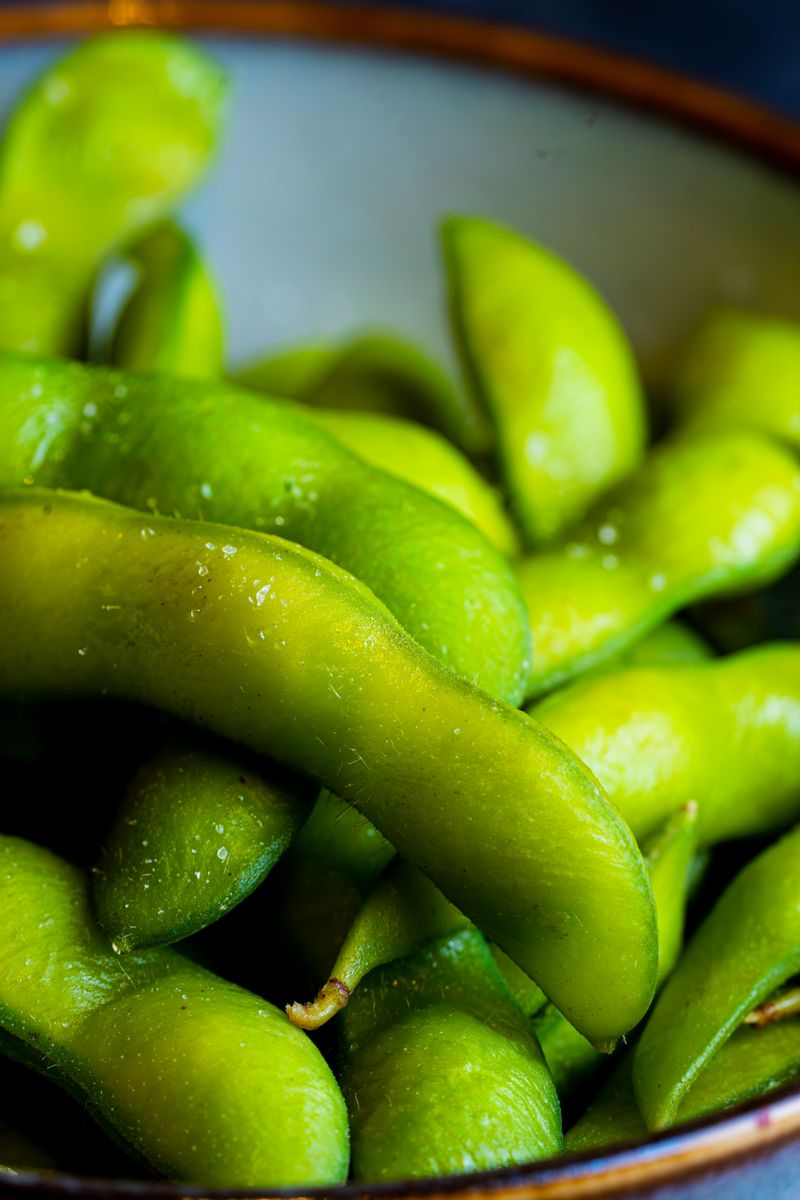
Can Babies Eat Edamame?
By Sarah, founder of SowAndSpoon · Reviewed April 2026
Yes, safe from 6 months
Choking risk: medium
Whole edamame beans are round and firm, making them a choking hazard for young babies. Always remove from pods and flatten or halve for babies under 12 months.
Allergen: soy. Introduce on its own so you can identify any reaction.
Babies can eat edamame from 6 months. Edamame is high in plant-based protein, iron, calcium, folate, and fiber. It is one of the few plant foods that provides complete protein with all essential amino acids.
Flavor guide
Raw edamame is starchy and mildly grassy with a firm texture that is not suitable for babies. Cooked edamame has a mild, clean, slightly nutty flavor with a tender but slightly dense texture that mashes into a grainy rather than smooth consistency. It pairs naturally with lemon, sesame, soy sauce (for older babies), avocado, ginger, and brown rice.
Edamame is a top allergen. Introduce on its own so you can identify any reaction before trying other new foods.
Printable allergen introduction calendarHow to Prepare Edamame by Age
Steam pods and pop out individual beans. Lightly mash each bean before serving - whole soybeans are a choking hazard. A great early allergen introduction.
Serving ideas:
- -Shell, cook until very soft, and mash or flatten each bean
- -Puree into a smooth dip with a squeeze of lemon
- -Mix mashed edamame into avocado or sweet potato
Whole cooked beans for pincer grip. Can also mash into a spread on toast.
Serving ideas:
- -Halve cooked beans for self-feeding (pincer grasp practice)
- -Mix into soft rice or noodles
- -Stir mashed edamame into pasta sauce
Whole beans as a snack, in stir-fries, rice dishes, or mashed into dips.
Serving ideas:
- -Serve whole cooked beans as a snack
- -Add to stir-fries or fried rice
- -Blend into a green hummus
Can You Freeze Edamame for Baby?
Shell beans from pods. Blanch for 3 minutes, transfer to an ice bath, drain, then freeze in a single layer before bagging.
Blanch for 3 minutes before freezing. Keeps for up to 12 months.
Batch prep tip
Cook shelled edamame in bulk, freeze flat on a baking sheet, then bag. Grab a handful for any meal. Keeps 4 months.
Edamame and Avocado Mash
From 6 monthsIngredients
- -1/2 cup shelled edamame (frozen is fine)
- -1/2 ripe avocado
- -1 tsp fresh lemon juice
- -1 to 2 tbsp water
Steps
- Cook edamame in boiling water for 5 minutes until very soft. Drain and cool slightly.
- Combine cooked edamame, avocado flesh, and lemon juice in a blender or food processor.
- Blend, adding water one tablespoon at a time, until smooth and creamy.
- For 6-8 months, serve on a preloaded spoon or spread thickly on a rice cake for self-feeding.
- For 9 months and older, mash with a fork for a chunkier texture.
Edamame is soy, a top allergen. If introducing soy for the first time, serve it on its own so you can identify any reaction.
Growing Edamame at Home
Soy allergen - introduce slowly. Whole beans are a choking risk under 9 months; mash first.
Ready in ~75-90 days from planting.
Edamame (soy) is a top allergen. Introduce it early (from 6 months) and offer regularly, as current research suggests early and sustained introduction may reduce allergy risk.
Per AAP and WHO guidelines, most fruits, vegetables, and herbs can be introduced from 6 months as part of complementary feeding. Always consult your pediatrician before introducing new foods, especially allergens.