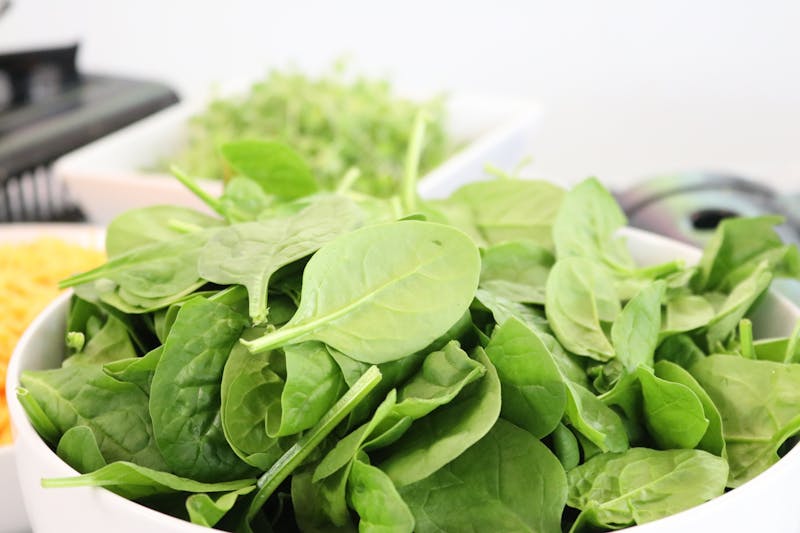
Can Babies Eat Spinach?
By Sarah, founder of SowAndSpoon · Reviewed April 2026
Yes, safe from 6 months
Choking risk: low
Cooked spinach is soft and wilts down to almost nothing. It poses very low choking risk when chopped or blended into food.
Not a common allergen
Spinach wilts down to almost nothing, which makes it easy to stir into foods your baby already likes. It is one of the best plant sources of iron for babies, especially when paired with something acidic like tomato or lemon to help absorption.
Babies can eat spinach from 6 months. Spinach is rich in iron, folate, calcium, and vitamins A, C, and K. The iron in spinach is better absorbed when paired with vitamin C-rich foods like tomatoes or bell pepper.
Flavor guide
Raw spinach has a mild, slightly grassy flavor with a faint mineral earthiness and tender leaves that wilt immediately on contact with heat or acid. Cooked spinach collapses to a fraction of its raw volume and develops a deeper, more savory, slightly iron-tinged flavor that is far richer than raw. It pairs naturally with lemon, garlic, butter, olive oil, eggs, parmesan, sweet potato, white beans, and nutmeg.
How to Prepare Spinach by Age
Wilt in a pan with a little butter or olive oil until completely soft. Chop finely and mix into purees, eggs, or soft grains. Not served as a standalone finger food at this age.
Serving ideas:
- -Wilt spinach and blend into a puree with sweet potato or pear
- -Mix finely chopped wilted spinach into mashed avocado
- -Stir into baby oatmeal with a squeeze of lemon
Finely chopped wilted spinach mixed into other foods. Baby can start picking up soft cooked pieces.
Serving ideas:
- -Add wilted spinach to scrambled eggs
- -Mix into mac and cheese
- -Stir into tomato pasta sauce
Raw in salads (small leaves), cooked in pasta, eggs, soups, smoothies.
Serving ideas:
- -Make spinach and cheese quesadillas
- -Blend into smoothies with banana and berries
- -Add to omelets or frittatas
Common questions
Can babies eat spinach?
Yes. Spinach is safe for babies from 6 months old as part of complementary feeding. Cooked spinach is iron-rich for a plant food. Always cook spinach before serving to babies: raw leaves are tough, fibrous, and harder to digest. Wilting or steaming for 2 minutes softens the texture completely. Pair with a vitamin C source like lemon juice or sweet potato to significantly increase iron absorption.
Are there nitrate concerns with spinach for babies?
The nitrate concern applies to very young infants (under 3 months) whose digestive systems cannot process nitrates safely. From 6 months, when solid food introduction begins per AAP and WHO guidelines, spinach is safe to offer in typical serving amounts. The American Academy of Pediatrics does not restrict spinach for babies starting solids at 6 months.
When can babies eat spinach?
Babies can eat cooked spinach from 6 months old. For the 6-8 month stage, wilt or steam spinach until fully soft, then blend or mix into purees. From 9 months, you can offer finely chopped cooked spinach mixed into pasta, eggs, or soft grains. Raw spinach in a salad is more appropriate after 12 months when texture handling is more developed.
Spinach Pairs Well With
For balanced baby meals, try combining spinach with:
Can You Freeze Spinach for Baby?
Wash leaves and remove tough stems. Blanch for 2 minutes, transfer to an ice bath, squeeze out excess water, then freeze in portions.
Blanch for 2 minutes before freezing. Keeps for up to 12 months.
Batch prep tip
Blanch a big bag of spinach (it shrinks a lot), squeeze out water, and freeze in ice cube portions. Drop a cube into pasta sauce, eggs, or smoothies. Keeps 3 months.
Spinach and Sweet Potato Puree
From 6 monthsIngredients
- -1 medium sweet potato, peeled and diced
- -2 large handfuls fresh spinach (about 2 cups, loosely packed)
- -1 tsp unsalted butter
- -1 tsp fresh lemon juice
- -2 to 4 tbsp water
Steps
- Steam diced sweet potato for 12 to 15 minutes until completely tender.
- Add spinach to the steamer basket for the last 2 minutes until wilted.
- Transfer sweet potato and spinach to a blender with butter and lemon juice.
- Blend smooth, adding water one tablespoon at a time until you reach a thick, spoonable consistency.
- Cool to room temperature. Serve on a preloaded spoon or spread thickly on a soft toast strip.
The lemon juice boosts iron absorption from the spinach significantly. Freeze in ice cube trays for up to 3 months.
Growing Spinach at Home
High in oxalates - fine in normal serving amounts. Cool-season crop, bolts in heat.
Ready in ~40-50 days from planting.
Fresh garden spinach has a milder, sweeter taste than store-bought, which can turn bitter. If baby refused spinach before, homegrown is worth trying again.
Per AAP and WHO guidelines, most fruits, vegetables, and herbs can be introduced from 6 months as part of complementary feeding. Always consult your pediatrician before introducing new foods, especially allergens.