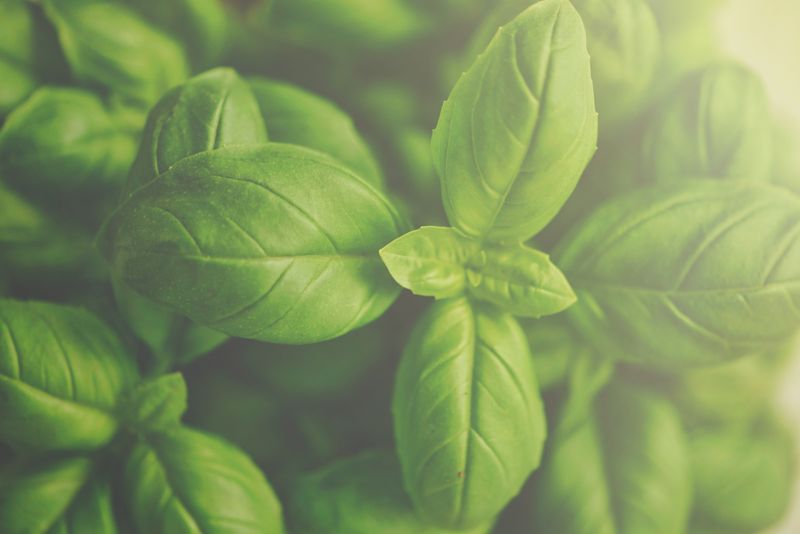
Can Babies Eat Basil?
By Sarah, founder of SowAndSpoon · Reviewed April 2026
Yes, safe from 6 months
Choking risk: low
Basil leaves are soft, thin, and break apart easily when chewed or gummed. They pose very little choking risk when mixed into food.
Not a common allergen
Babies can eat basil from 6 months. Fresh basil is rich in vitamin K, which supports healthy blood clotting, plus vitamin A and iron. Per USDA FoodData Central, even small amounts deliver beta-carotene and antioxidants that support your baby's developing immune system.
This guide covers fresh basil. Dried herbs have a more concentrated flavor; if using dried, start with a very small pinch mixed into food for babies under 12 months.
Flavor guide
Fresh basil has a sweet, peppery flavor with clove-like undertones that soften noticeably when exposed to heat. Stirring torn leaves into warm food releases aromatic oils and mellows the intensity to a gentle herbal sweetness. It pairs naturally with tomatoes, olive oil, lemon, garlic, and mild soft cheeses like ricotta and mozzarella.
How to Prepare Basil by Age
Add finely minced fresh basil to soft foods, pasta, or eggs as a flavor exposure. Not a standalone food - a seasoning.
Serving ideas:
- -Tear leaves and stir into mashed avocado or sweet potato
- -Blend into a smooth puree with peas or zucchini
- -Mix finely torn leaves into plain yogurt
Continue as a flavor ingredient in family meals.
Serving ideas:
- -Toss torn basil into soft pasta with olive oil
- -Mix into ricotta spread on toast strips
- -Stir into scrambled eggs
Pesto, caprese, pizza, pasta - wherever basil is used in family cooking.
Serving ideas:
- -Simple pesto (basil, olive oil, parmesan) on pasta or toast
- -Caprese bites with soft mozzarella and tomato
- -Stir chopped basil into tomato soup
Common questions
Can babies have basil?
Yes. Fresh basil is safe for babies from 6 months old. The leaves are soft, break apart easily, and pose very little choking risk. Basil is not a common allergen. The flavor is sweet and aromatic with a mild pepper note that becomes even gentler when stirred into warm food. Start by mixing a few torn leaves into mashed avocado, sweet potato, or pasta to introduce the flavor alongside familiar foods.
Is basil good for babies?
Yes. Fresh basil provides vitamin K, vitamin A, iron, and antioxidants (USDA FoodData Central). Beyond nutrients, the AAP encourages introducing a variety of flavors during the complementary feeding window. Research by Mennella and others has consistently shown that babies exposed to diverse flavors in the first year accept a wider range of foods as toddlers. Basil is also a very easy herb to grow at home, making it a natural bridge to the garden.
Can babies eat pesto?
Traditional pesto contains basil, olive oil, parmesan, pine nuts, and garlic. Pine nuts are a tree nut (a top allergen), so introduce tree nuts separately before serving pesto if you have not already. Parmesan contains cow's milk protein, so if dairy has not been introduced yet, introduce it first in another form (yogurt, soft cheese) before serving pesto. Once dairy and tree nuts have each been tried without issue, pesto is safe at any age.
Basil Pairs Well With
For balanced baby meals, try combining basil with:
Can You Freeze Basil for Baby?
Blend fresh leaves with a little olive oil and freeze in ice cube trays. Each cube is a ready-to-use portion for pasta, eggs, or soft foods.
Batch prep tip
Blend fresh basil with a splash of olive oil and freeze in ice cube trays. Pop one cube into pasta, purees, or soups. Keeps for up to 3 months.
Basil Pea Puree
From 6 monthsIngredients
- -1 cup frozen peas
- -8 fresh basil leaves
- -1 tsp olive oil
- -2 tbsp water
Steps
- Steam peas for 4 to 5 minutes until completely tender.
- Add peas, basil, olive oil, and water to a blender.
- Blend until very smooth for 6-8 months, or leave slightly textured for 9 months and older.
- Thin with additional water or breast milk to reach desired consistency.
- Serve warm or at room temperature.
Freeze in ice cube trays for up to 3 months. Stir a cube into pasta or rice for a quick meal.
Growing Basil at Home
Pinch off flower buds to extend the harvest. Annual - plant every year. Love heat.
Ready in ~60-90 days from planting.
Basil grows well in a kitchen window. One plant gives you weeks of harvests, and babies who see herbs growing tend to be more willing to try them.
Per AAP and WHO guidelines, most fruits, vegetables, and herbs can be introduced from 6 months as part of complementary feeding. Always consult your pediatrician before introducing new foods, especially allergens.