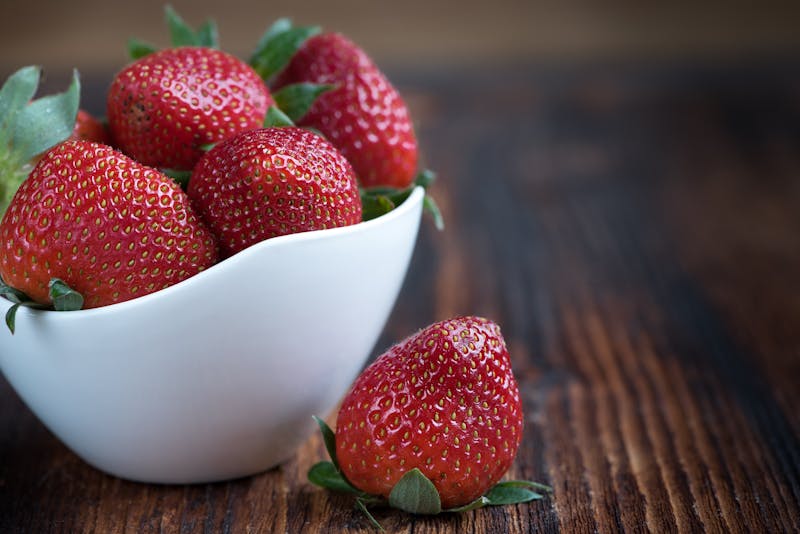
Can Babies Eat Strawberries?
By Sarah, founder of SowAndSpoon · Reviewed April 2026
Yes, safe from 6 months
Choking risk: low
Whole strawberries can be a choking hazard for young babies. Cut in half or quarters depending on size. Very large berries can be served whole to young babies who will gnaw on them.
Not a common allergen
Strawberries are a top allergen introduction food because they pair so well with other first foods like yogurt and oatmeal. Garden strawberries taste sweeter than store-bought, and babies who eat them during the flavor window (under 12 months) tend to accept tart flavors more readily later.
Babies can eat strawberries from 6 months. Strawberries are rich in vitamin C (more per serving than oranges), manganese, folate, and antioxidants. They support iron absorption when paired with iron-rich foods.
Flavor guide
Fresh ripe strawberries are bright, sweet, and lightly tart with a floral fragrance and juicy, tender flesh that breaks apart easily when gummed. Underripe strawberries are noticeably firmer and sour with almost no sweetness, so ripeness matters far more here than with most fruits. They pair naturally with yogurt, banana, cream cheese, oats, lemon, vanilla, and mint.
How to Prepare Strawberries by Age
Remove hull, cut into quarters lengthwise. Or mash into yogurt or oatmeal. Watch for any reaction - strawberries occasionally cause mild skin reactions (not a true allergy, but worth noting).
Serving ideas:
- -Halve large strawberries lengthwise and let baby gnaw on the cut face. Ripe berries mash easily against the gums.
- -Mash 2-3 ripe berries with a fork and stir into plain whole-milk yogurt for a naturally sweet, iron-friendly first food (allergen intro: dairy)
- -Spread mashed strawberry onto a soft rice cake or toast strip as a preloaded finger food
- -Puree with banana and a splash of breast milk or formula to make a bright pink sauce. Serve on a spoon or as a soft dip for toast fingers.
- -Mix mashed strawberry into iron-fortified oatmeal to boost vitamin C, which significantly increases iron absorption from the oats
Quartered or diced fresh strawberries. Large ones can be offered as a whole spear.
Serving ideas:
- -Quarter strawberries lengthwise into four slim wedges for pincer grasp practice. The shape is easy to pick up and holds together.
- -Fold diced strawberry into ricotta or cottage cheese for a protein-rich snack with natural sweetness
- -Spread mashed strawberry on a soft whole wheat toast strip for a simple open-faced sandwich (allergen intro: wheat)
- -Stir diced strawberry into plain Greek yogurt with a pinch of cardamom. The spice introduces a new flavor dimension.
- -Layer mashed strawberry with soft banana slices in a small bowl for a naturally sweet, no-added-sugar parfait
Whole (small ones), sliced, in smoothies, yogurt, baked goods.
Serving ideas:
- -Serve whole small strawberries or halved large ones. Most 12 month olds handle them safely with supervision.
- -Blend into smoothies with banana, spinach, and whole-milk yogurt for a nutrient-dense snack
- -Fold sliced strawberries into overnight oats the night before for a quick breakfast
- -Make a simple strawberry compote: cook halved berries in a small pan with a splash of water until jammy, cool, and serve over pancakes or porridge
- -Skewer halved strawberries, banana chunks, and soft cheese cubes on a blunt toddler skewer for a fun self-feeding snack
Common questions
Are strawberries an allergen for babies?
No. Strawberries are not in the top 9 allergens recognized by the FDA (milk, eggs, peanuts, tree nuts, wheat, soy, fish, shellfish, and sesame). A true strawberry allergy is rare. The red rash many babies get around their mouth after eating strawberries is a contact reaction caused by the natural acids in the fruit, not an IgE-mediated allergic response. It typically fades within 30 minutes and is not a reason to avoid strawberries.
Why does my baby get a rash around their mouth after eating strawberries?
This is called a perioral contact rash and it is very common with acidic fruits. The acidity of the strawberry irritates the sensitive skin around the mouth and chin, causing temporary redness. It is not hives, it does not spread beyond the contact area, and it resolves quickly. Wiping the mouth clean after eating and applying a light barrier of petroleum jelly before meals can help. If you see hives beyond the mouth, vomiting, or breathing changes, contact your pediatrician.
Can infants eat strawberries?
Yes. Strawberries are safe for infants from 6 months old as part of baby-led weaning or complementary feeding. For young babies, mash ripe strawberries to a smooth consistency or cut large berries in half lengthwise for gnawing. Avoid whole berries for babies under 12 months.
Do I need to wait to introduce strawberries to my baby?
No waiting period is needed. Older guidance sometimes suggested delaying berries until 12 months due to allergy concerns, but current AAP guidelines do not recommend delaying any food (except honey, which is unsafe before 12 months due to botulism risk). Introduce strawberries whenever you are ready, from 6 months.
Strawberries Pairs Well With
For balanced baby meals, try combining strawberries with:
Can You Freeze Strawberries for Baby?
Hull and halve. Spread on a baking sheet and freeze until solid, then transfer to bags. Texture softens when thawed -- perfect for mixing into oatmeal or yogurt.
Batch prep tip
Hull and freeze fresh strawberries on a baking sheet, then bag them. Use frozen in smoothies, thaw for oatmeal topping, or blend into sauces. Keeps 6 months.
Strawberry and Banana Mash
From 6 monthsIngredients
- -4 to 5 ripe strawberries, hulled
- -1/2 ripe banana
- -2 tbsp plain whole-milk yogurt
Steps
- Hull strawberries and cut into quarters.
- In a small bowl, mash banana and strawberries together with a fork until smooth with small soft chunks.
- Stir in yogurt until combined.
- For 6-8 months, serve on a preloaded spoon or spread on a soft rice cake.
- For 9 months and older, leave slightly chunkier for texture practice.
Yogurt is a dairy allergen. Omit the yogurt and add an extra tablespoon of mashed banana for creaminess if dairy has not yet been introduced. Strawberries rarely cause true allergies despite their reputation.
Growing Strawberries at Home
Perennial - spreads via runners. Very rewarding for kids to pick. First-year plants produce less; better yield from year 2 onward.
Ready in ~365-730 days from planting.
Garden strawberries are smaller but dramatically more flavorful than store-bought. Babies often love them. They also happen to be on the "Dirty Dozen" pesticide list, so growing your own is a real quality win.
Per AAP and WHO guidelines, most fruits, vegetables, and herbs can be introduced from 6 months as part of complementary feeding. Always consult your pediatrician before introducing new foods, especially allergens.