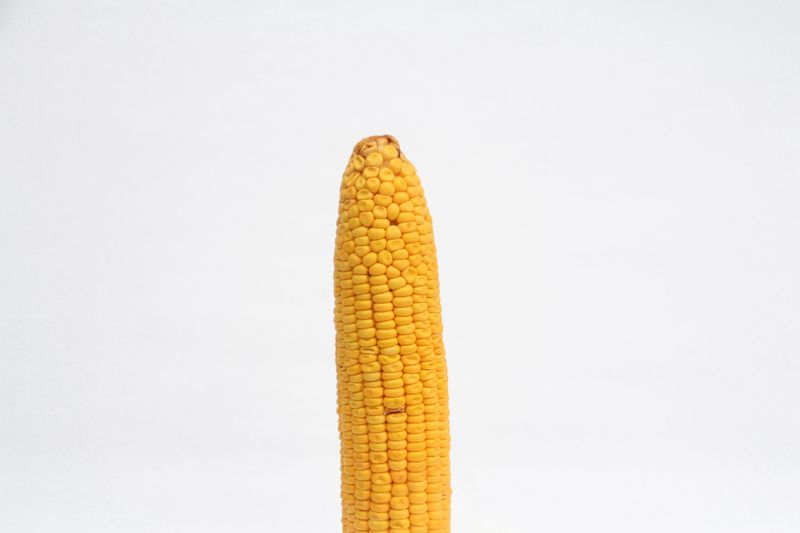
Can Babies Eat Corn?
By Sarah, founder of SowAndSpoon · Reviewed April 2026
Yes, safe from 9 months
Choking risk: medium
Individual corn kernels are small and can be hard to chew. For babies under 9 months, mash or blend corn. Older babies can handle whole kernels if they have a good chewing pattern.
Not a common allergen
Babies can eat corn from 9 months. Corn provides fiber, B vitamins, and antioxidants like lutein and zeaxanthin, which support eye health. Sweet corn is a great energy source for active babies.
Flavor guide
Fresh sweet corn has a juicy, milky sweetness when raw that intensifies when cooked, developing a deeper, starchy richness. The kernels have a slightly chewy outer skin that stays intact even after cooking, which is why whole kernels are a choking concern for young babies. It pairs naturally with butter, lime, cilantro, black beans, cheese, and mild chili.
How to Prepare Corn by Age
Cut kernels off the cob. Lightly cook if not already done. Individual kernels are a great pincer grip food. Do not serve on the cob - a choking risk.
Serving ideas:
- -Serve individual kernels (cut in half if concerned)
- -Mix into black bean mash
- -Stir into scrambled eggs or pancake batter
- -Offer corn on the cob for gnawing (stay within arm's reach and remove if baby pulls off clumps rather than gnawing)
Kernels in any dish. Corn on the cob is safe now with supervision.
Serving ideas:
- -Serve corn on the cob as a fun finger food
- -Add to tacos, soup, or cornbread
- -Make corn fritters with zucchini
Can You Freeze Corn for Baby?
Cut kernels off the cob. Blanch kernels for 4 minutes, transfer to an ice bath, drain well, then freeze in a single layer before bagging.
Blanch for 4 minutes before freezing. Keeps for up to 12 months.
Batch prep tip
Cut kernels off cooked cobs and freeze flat on a baking sheet. Transfer to a bag and use from frozen in any dish. Keeps 4 months.
Sweet Corn Puree with Butter
From 9 monthsIngredients
- -2 ears fresh sweet corn, husked (or 1 1/2 cups frozen corn kernels)
- -1 tbsp unsalted butter
- -3 to 5 tbsp water or whole milk
Steps
- Cut kernels off the cob or measure frozen kernels.
- Simmer corn kernels in a small saucepan with 1/2 cup water for 8 to 10 minutes until completely tender.
- Drain, reserving cooking liquid, and transfer to a blender with butter.
- Blend on high for 2 minutes until very smooth, adding reserved liquid or milk one tablespoon at a time.
- Press through a fine-mesh strainer with a spoon to remove fibrous kernel skins for the smoothest texture.
- For 12 months and older, skip straining and serve kernel pieces as self-feeding practice.
Straining is especially important for the 9-11 month age range. Freeze strained puree in ice cube trays for up to 3 months. Stir into polenta or potato mash.
Growing Corn at Home
Corn on the cob is a choking risk under 12 months. Kernels only until then. Needs a lot of space and full sun.
Ready in ~60-100 days from planting.
There is nothing like fresh garden corn, picked and cooked within hours. The sugar-to-starch conversion happens fast after picking, so homegrown corn is noticeably sweeter.
Per AAP and WHO guidelines, most fruits, vegetables, and herbs can be introduced from 6 months as part of complementary feeding. Always consult your pediatrician before introducing new foods, especially allergens.