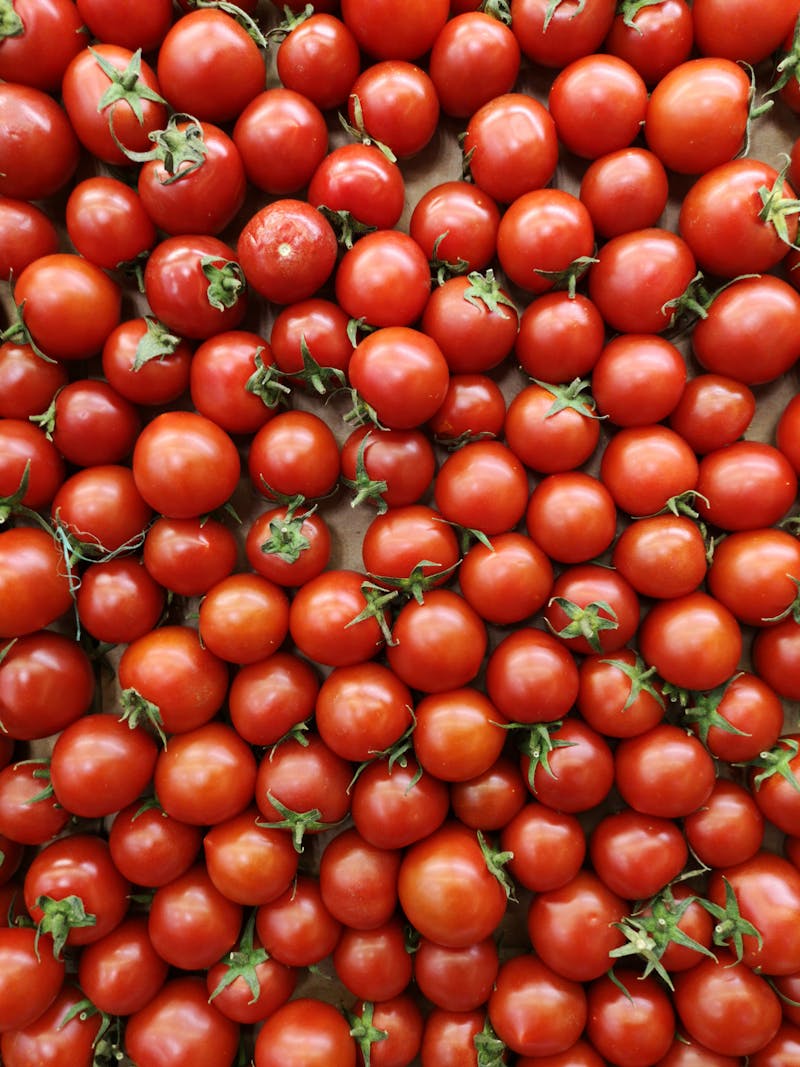
Can Babies Eat Cherry Tomatoes?
By Sarah, founder of SowAndSpoon · Reviewed April 2026
Yes, safe from 6 months
Choking risk: medium
Whole cherry tomatoes are a serious choking hazard. Their round shape and slippery skin can block a baby's airway. Always quarter lengthwise (never halve) for babies under 12 months. The quartering rule applies to all small round foods of similar size.
Not a common allergen
Cherry tomatoes are the easiest tomato to grow at home, and one plant will produce more than most families can eat. The catch for babies is the shape: whole and halved cherry tomatoes are a choking hazard. Quartered lengthwise is the safe cut.
Babies can eat cherry tomatoes from 6 months. Cherry tomatoes provide vitamin C, lycopene (a powerful antioxidant linked to heart health), potassium, and vitamin A. Cooking cherry tomatoes increases lycopene bioavailability, so roasted or blistered tomatoes are even more nutritious than raw.
Flavor guide
Raw cherry tomatoes are sweet-tart and juicy with a bright, fresh acidity and thin skins that slip off when cooked. Roasting or blistering them collapses the flesh into a concentrated, jammy sweetness with deeper umami and reduced sharpness. They pair naturally with olive oil, garlic, basil, parmesan, ricotta, pasta, and eggs.
How to Prepare Cherry Tomatoes by Age
Quarter each tomato top to bottom (never crosswise). Skin can stay on. Squish slightly to release juice so baby can taste.
Serving ideas:
- -Blister a handful in a hot pan with olive oil for 5-7 minutes until skins split and collapse. Smash flat with a fork and serve on preloaded toast strips or mixed into soft scrambled eggs.
- -Roast a full tray at 400 degrees F for 25 minutes until fully collapsed and jammy, then blend smooth as a sauce base for pasta or polenta with no skin to worry about.
- -Simmer in a small pan with olive oil and a peeled garlic clove for 10 minutes until soft; remove garlic, mash tomatoes, and stir into soft lentils or puree for a savory, iron-rich meal
- -Peel skins off blistered tomatoes (they slip right off) and mash the flesh with a fork. Serve alongside a soft egg or lentils for a complete meal with no skin or whole pieces.
Quartered cherry tomatoes. Skin stays on. Great pincer grip food.
Serving ideas:
- -Quarter lengthwise into four slim wedges. This is the safe shape for this age and makes a good pincer grasp target when served in a bowl alongside soft pasta.
- -Blister and roughly smash into a 5-minute pasta sauce with a drizzle of olive oil and a torn basil leaf. Toss with very soft pasta cut into short pieces.
- -Stir quartered blistered tomatoes into soft polenta or risotto so the texture is distributed and easier to manage
- -Fold quartered cooked tomatoes into scrambled eggs with a little olive oil. The egg acts as a binder and the meal delivers protein, fat, and vitamin C together.
- -Mash roasted cherry tomatoes with white beans and a drizzle of olive oil for a protein-rich savory spread on toast fingers
Whole cherry tomatoes are fine once chewing is more developed. Halve if still cautious.
Serving ideas:
- -Quarter and serve raw alongside soft mozzarella and torn fresh basil with a drizzle of olive oil for a mini caprese that introduces acid, fat, and fresh herb together.
- -Roast a full tray and freeze in portions; reheat from frozen as a quick weeknight pasta sauce that takes under 15 minutes total
- -Add quartered raw cherry tomatoes to grain bowls, pasta, or quesadillas. At 12 months, toddlers can handle raw tomato pieces with supervision.
- -Blend roasted cherry tomatoes with roasted red pepper and a pinch of paprika into a bright, slightly smoky dipping sauce for toast or soft pita
- -Toss quartered cherry tomatoes with cucumber chunks, a squeeze of lemon, and torn mint for a simple side salad the whole family eats
Common questions
Can babies eat raw cherry tomatoes?
Whole and halved cherry tomatoes are a serious choking hazard due to their round shape and slippery skin. Raw cherry tomatoes must always be quartered lengthwise (not halved) for babies under 12 months. Quartered raw cherry tomatoes can be offered from around 9 months when the pincer grasp is developing. For babies 6-8 months, cook cherry tomatoes until soft and smash or serve as a sauce to eliminate the choking risk entirely.
Why does my baby get a red rash around their mouth after eating tomatoes?
A rash around the mouth after eating tomatoes is almost always a perioral contact rash from the natural acidity, not a true tomato allergy. Tomato acidity irritates sensitive skin on contact and causes temporary redness that fades within 30 minutes. It is not hives, it does not spread, and no treatment is needed. True tomato allergy is uncommon. If you notice hives on the body, swelling, vomiting, or breathing difficulty, contact your pediatrician.
Are cherry tomatoes better than regular tomatoes for baby-led weaning?
Cherry tomatoes have naturally thin skins that blister and separate from the flesh when cooked, making them easier to prep for babies than slicing tomatoes. For BLW, roasted or blistered cherry tomatoes work well because the skins loosen and the flesh becomes very soft. Regular tomatoes work well too, especially roasted or stewed, but require peeling for young babies. Both are nutritionally equivalent.
When can babies eat tomatoes?
Babies can eat cooked tomatoes from 6 months old. Cook until soft and serve mashed, as a sauce, or blended. From 9 months, raw cherry tomatoes quartered lengthwise are safe with supervision. Whole or halved raw cherry tomatoes are a choking hazard through at least age 3.
Cherry Tomatoes Pairs Well With
For balanced baby meals, try combining cherry tomatoes with:
Can You Freeze Cherry Tomatoes for Baby?
Spread whole on a tray, freeze, then bag. Frozen cherry tomatoes burst when thawed, so use in sauces and soups rather than as finger food.
Batch prep tip
Roast a full tray of cherry tomatoes with olive oil at 400 degrees F for 25-30 minutes until collapsed. Blend or smash into a sauce and freeze in ice cube trays. One cube is perfect for a portion of pasta or toast. Keeps 4 months.
Blistered Cherry Tomato Toast
From 6 monthsIngredients
- -1 cup cherry tomatoes
- -1 tsp olive oil
- -2 tbsp ricotta cheese
- -1 slice soft whole wheat bread
Steps
- Heat a small skillet over medium-high heat. Add olive oil and cherry tomatoes.
- Cook for 5 to 7 minutes, shaking the pan occasionally, until tomatoes have blistered and burst.
- Smash the tomatoes in the pan with a fork into a rough, jammy sauce.
- Toast bread until soft-firm (not hard) and spread thickly with ricotta.
- Spoon smashed tomatoes over the ricotta and cut toast into finger-length strips.
- For 6-8 months, mash the tomato topping fully smooth and serve on a preloaded spoon alongside the toast.
Allergen note: contains dairy and wheat. For the youngest babies, skip the toast and serve tomato-ricotta mash on a spoon.
Growing Cherry Tomatoes at Home
The easiest tomato to grow in containers. Kids love picking them off the vine. Plant one cherry tomato plant even if you plant nothing else. Whole cherry tomatoes are a choking risk under 12 months - always quarter them.
Ready in ~55-70 days from planting.
Cherry tomatoes are among the easiest tomatoes to grow and one plant produces more than most families can eat. Sun Gold (orange) and Sweet 100 (red) are the sweetest varieties and tend to have thinner skins, which is a bonus for baby food.
Per AAP and WHO guidelines, most fruits, vegetables, and herbs can be introduced from 6 months as part of complementary feeding. Always consult your pediatrician before introducing new foods, especially allergens.