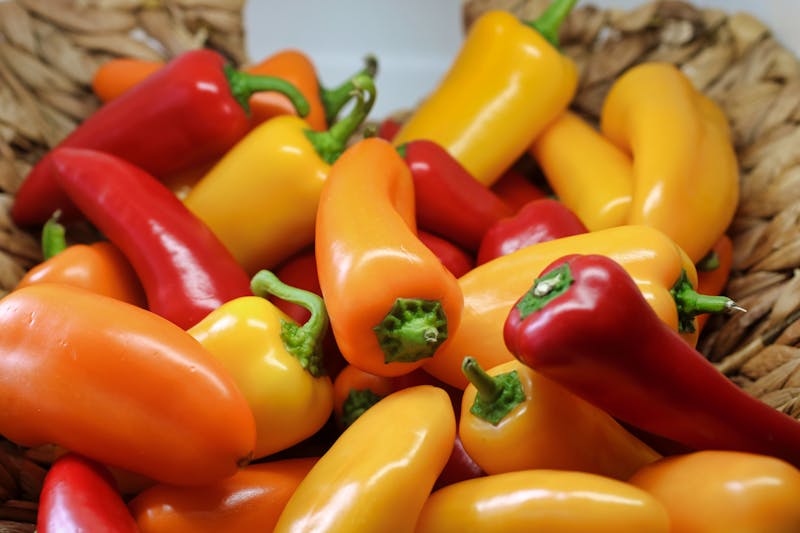
Can Babies Eat Mini Sweet Peppers?
By Sarah, founder of SowAndSpoon · Reviewed April 2026
Yes, safe from 6 months
Choking risk: medium
Raw mini pepper skin is tough and waxy, posing a choking risk for young babies who cannot easily break it down. Roast or steam until soft and remove the skin for babies under 9 months. Cooked mini pepper flesh is soft and low risk.
Not a common allergen
Babies can eat mini sweet peppers from 6 months. Mini sweet peppers have the same exceptional vitamin C content as full-size bell peppers and also provide vitamin A, folate, and antioxidants. Red and orange mini peppers are the most nutrient-dense.
Flavor guide
Raw mini sweet peppers are crisp, juicy, and intensely sweet with a fruity, almost candy-like flavor and none of the grassy bitterness of green bell peppers. Roasting deepens that sweetness to a rich, jammy concentrate and softens the flesh to a silky texture perfect for babies. They pair naturally with olive oil, garlic, tomato, eggs, ricotta, mild spices, and lemon.
How to Prepare Mini Sweet Peppers by Age
Halve lengthwise, remove seeds and membrane. Roast at 400F for 20-25 minutes until very soft. The skin blisters and peels easily after roasting, peel for smoother texture. Offer halves as a finger food.
Serving ideas:
- -Roast whole until charred and very soft, peel skin, and serve flesh as thick strips
- -Blend roasted peeled mini peppers into a sweet sauce with tomato for pasta
- -Mix roasted peeled pepper flesh into mashed white beans or hummus
Roasted halves or strips. Soft enough for easy gumming. The concentrated sweet flavor makes them a crowd pleaser. Steam until very soft as an alternative to roasting.
Serving ideas:
- -Roast, peel, and dice into small pieces for self-feeding
- -Stuff halved mini peppers with cream cheese and herbs and roast until soft
- -Blend roasted peppers into an egg scramble or fold into a soft omelet
Raw strips for snacking, stuffed and baked, or roasted alongside other vegetables.
Serving ideas:
- -Serve thinly sliced raw mini peppers once chewing is strong
- -Stuff with soft fillings (ricotta, hummus) as a finger food
- -Roast and add to quesadillas, pasta, or rice bowls
Common questions
Can babies eat mini peppers?
Yes. Mini sweet peppers are safe for babies from 6 months when cooked until soft and the skin is removed. Raw mini pepper skin is tough and waxy, which poses a choking risk for young babies. Roast or steam until very soft, peel the skin, and serve the flesh as thick strips or blended into other foods. From about 12 months, most toddlers with strong chewing can handle thin raw slices with supervision.
Do I need to peel mini peppers for babies?
For babies under 9 months, yes. The skin of mini peppers (like all bell peppers) is tough and waxy, and young babies cannot chew it effectively. Roasting makes peeling easy: the skin blisters and slides off after cooling. From 9-11 months, well-roasted peppers with softened skin are generally manageable. From 12 months, thin raw slices are usually fine for toddlers with established chewing.
Are mini peppers more nutritious than regular bell peppers?
Mini sweet peppers and full-size bell peppers have nearly identical nutrition per gram. Both are excellent sources of vitamin C, vitamin A, and folate. Red and orange varieties (mini or full-size) have the most nutrients. Mini peppers tend to be sweeter because they have thinner walls with a higher sugar concentration, which makes them appealing to babies who are learning new flavors.
Can You Freeze Mini Sweet Peppers for Baby?
Halve and seed, roast if desired, freeze on a tray, then bag. Use frozen in cooked dishes. Not ideal raw after freezing.
Batch prep tip
Roast a full bag of mini peppers at 425 degrees F until soft and charred, peel, and freeze flat in a single layer. Transfer to a bag once frozen. Thaw a few strips for any meal. Keeps 4 months.
Roasted Mini Pepper and Egg Scramble
From 6 monthsIngredients
- -4 mini sweet peppers, halved and seeds removed
- -2 eggs
- -1 tsp olive oil
- -1 tbsp whole milk or formula
Steps
- Preheat oven to 425F. Place pepper halves cut-side down on a small baking sheet and roast for 15 to 18 minutes until skin is blistered and flesh is very soft.
- Let peppers cool, then peel away skin and chop flesh finely.
- Whisk eggs with milk in a small bowl.
- Heat olive oil in a nonstick pan over low heat. Add chopped roasted pepper and stir for 30 seconds.
- Pour egg mixture over peppers and cook over low heat, stirring slowly, for 2 to 3 minutes until just set and soft.
- For 6-8 months, mash the scramble with a fork and serve on a preloaded spoon. For 9 months and older, serve in small pieces for self-feeding.
Egg is a top allergen. This recipe doubles as an egg allergen introduction. If introducing egg for the first time, serve it on its own so you can identify any reaction.
Growing Mini Sweet Peppers at Home
Sweeter and more concentrated in flavor than bell peppers, and easier to grow, less water stress and disease pressure. Lunchbox Pepper varieties (red, orange, yellow) are prolific in containers. Start indoors 8-10 weeks before last frost. Harvest when fully colored for maximum sweetness.
Ready in ~60-80 days from planting.
Mini peppers tend to be sweeter and thinner-walled than standard bell peppers, which means they roast faster and have a more concentrated flavor. Grow a mix of red, orange, and yellow for a colorful harvest that covers multiple rainbow food groups for BLW.
Per AAP and WHO guidelines, most fruits, vegetables, and herbs can be introduced from 6 months as part of complementary feeding. Always consult your pediatrician before introducing new foods, especially allergens.