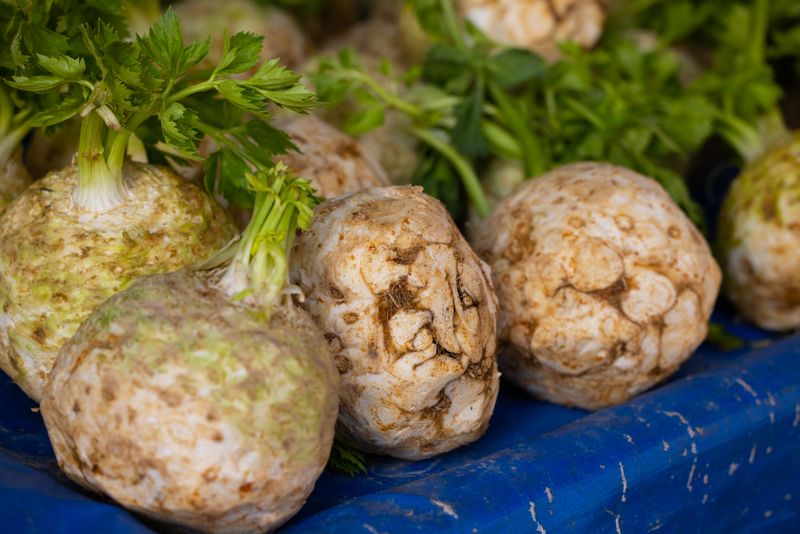
Can Babies Eat Celeriac?
By Sarah, founder of SowAndSpoon · Reviewed April 2026
Yes, safe from 6 months
Choking risk: low
Raw celeriac is too hard for babies. Always cook until very soft. Once cooked, it mashes easily and poses low choking risk.
Allergen: celery. Introduce on its own so you can identify any reaction.
Babies can eat celeriac from 6 months. Celeriac provides vitamin K, vitamin C, phosphorus, and fiber. It is low in calories but nutrient-dense, with a mild celery-like flavor babies often enjoy.
Flavor guide
Raw celeriac has a firm, starchy texture with a pronounced celery-like flavor and a mild herbal bitterness. Cooking softens both the texture and the flavor dramatically: boiled or roasted celeriac becomes creamy and mild, with a subtle savory depth similar to a cross between celery and parsnip. It pairs naturally with butter, cream, apple, potato, parsley, lemon, and thyme.
Celeriac is a top allergen. Introduce on its own so you can identify any reaction before trying other new foods.
Printable allergen introduction calendarHow to Prepare Celeriac by Age
Peel and roast or steam until very soft. Cut into thick sticks. Mild celery flavor without the stringy texture risk.
Serving ideas:
- -Peel, boil until very soft, and mash with butter
- -Blend into a smooth puree with potato or pear
- -Mix mashed celeriac into baby cereal
Diced, roasted or mashed. Celery root mash is an excellent weaning food.
Serving ideas:
- -Dice soft-cooked celeriac into small pieces
- -Mix into mashed potato for subtle flavor
- -Stir into a creamy soup with carrot
Mashed, in soups, roasted, raw grated in remoulade.
Serving ideas:
- -Roast celeriac fries until golden and soft
- -Add to a root vegetable mash with parsnip and carrot
- -Blend into a creamy celeriac soup
Celeriac and Potato Mash
From 6 monthsIngredients
- -1 cup celeriac, peeled and diced (about 1/4 of a medium root)
- -1 medium Yukon Gold potato, peeled and diced
- -1 tbsp unsalted butter
- -3 to 5 tbsp whole milk or water
Steps
- Combine celeriac and potato in a saucepan, cover with cold water, and bring to a boil.
- Cook for 15 to 18 minutes until both are completely tender and pierce easily with a fork.
- Drain well and return to the warm saucepan for 1 minute to steam off excess moisture.
- Mash with butter, then blend smooth adding milk or water one tablespoon at a time.
- For 9 months and older, leave the mash slightly chunky for texture practice.
Freeze in ice cube trays for up to 3 months. Celeriac mash thickens when frozen; thin with a splash of water when reheating.
Growing Celeriac at Home
Celery allergen - introduce slowly. Underrated and very flavorful. Long growing season.
Ready in ~110-120 days from planting.
Celeriac looks intimidating but tastes mild and slightly sweet once cooked. It is a great way to add variety if your baby loves potatoes.
Per AAP and WHO guidelines, most fruits, vegetables, and herbs can be introduced from 6 months as part of complementary feeding. Always consult your pediatrician before introducing new foods, especially allergens.