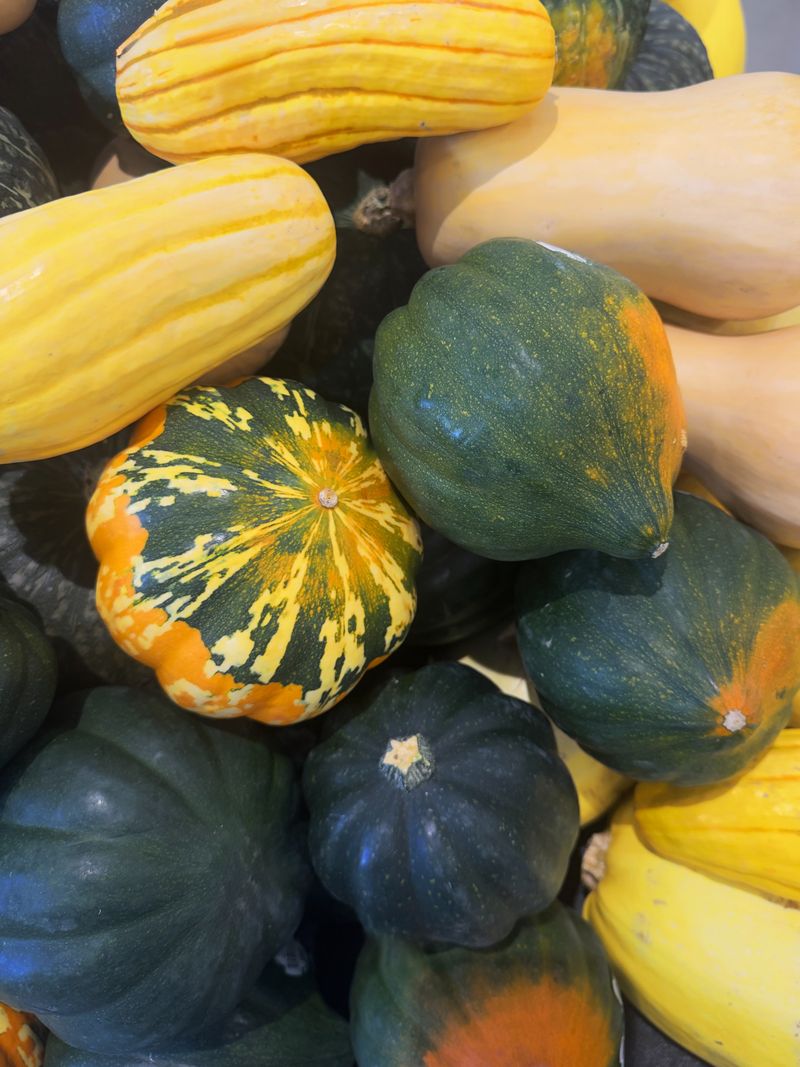
Can Babies Eat Acorn Squash?
By Sarah, founder of SowAndSpoon · Reviewed April 2026
Yes, safe from 6 months
Choking risk: low
Raw squash is too hard for babies. Once baked or steamed until soft, acorn squash is very low risk. It should mash easily with a fork.
Not a common allergen
Babies can eat acorn squash from 6 months. Acorn squash provides beta-carotene (vitamin A), vitamin C, potassium, magnesium, and B vitamins. Its natural sweetness appeals to most babies.
Flavor guide
Acorn squash has a dense flesh that becomes smooth and custardy when roasted. The flavor is mildly sweet and nutty, less intense than butternut squash, with a subtle earthiness. Butter, cinnamon, sage, and maple all pair well with its natural sweetness.
How to Prepare Acorn Squash by Age
Roast until very soft. Scoop flesh and cut into thick spears. Naturally sweet and easy to gum. One of the best first foods.
Serving ideas:
- -Bake until soft and mash with tahini or nut butter for a calorie-dense, iron-rich spread on a preloaded spoon (nut and sesame allergies: introduce these separately first)
- -Cut baked squash into thick wedges for gripping and serve alongside soft lentils or mashed black beans
- -Blend roasted acorn squash with a cooked egg yolk and a drizzle of olive oil for a complete meal with fat, protein, and beta-carotene (egg is a top allergen, introduce separately first)
Dice roasted flesh into small pieces or offer as self-feeding spoon food.
Serving ideas:
- -Dice soft baked squash for self-feeding
- -Mix into oatmeal or yogurt
- -Stir mashed squash into pasta
Stuffed, roasted, in soups, mashed.
Serving ideas:
- -Roast wedges as finger food
- -Blend into a creamy squash soup
- -Add to pancake or muffin batter
Common questions
Can babies eat acorn squash?
Yes. Acorn squash is safe for babies from 6 months old. Bake or steam until the flesh is completely soft and mashable. It has a mild, slightly nutty sweetness that most babies accept easily. Serve mashed, pureed, or as soft wedges for baby-led weaning.
Is acorn squash skin safe for babies?
No. Acorn squash skin is too tough and ridged for babies to eat. Scoop the flesh out after cooking and discard the skin. For baby-led weaning with older babies, you can leave a strip of skin on a wedge as a "handle" for gripping, but the baby should only eat the soft flesh, not the skin itself.
What is the difference between acorn squash and butternut squash for babies?
Both are great for babies from 6 months. Acorn squash has a milder, nuttier, slightly drier flavor. Butternut squash is sweeter, creamier, and blends smoother. Butternut is often the easier first puree, while acorn squash works well as soft wedges for BLW. Butternut squash has significantly more beta-carotene than acorn squash, but acorn squash still provides a meaningful amount along with more potassium.
Can You Freeze Acorn Squash for Baby?
Roast until very soft. Scoop flesh, let cool, then freeze flat in bags or in ice cube trays. Thaws quickly and is ready to serve as spears or puree.
Batch prep tip
Bake 2-3 squash at once, scoop flesh, and freeze in muffin cups. Pop one out per meal. Great base for purees, soups, or baking. Keeps 3 months.
Roasted Acorn Squash with Cinnamon
From 6 monthsIngredients
- -1 small acorn squash, halved and seeds removed
- -1 tsp unsalted butter
- -1/4 tsp ground cinnamon
Steps
- Preheat oven to 400F.
- Place squash halves cut-side down on a baking sheet and roast for 35 to 45 minutes until flesh is completely soft and a fork slides in without resistance.
- Flip cut-side up, add butter to each cavity, and let melt for 1 minute.
- Scoop flesh into a bowl and mash with cinnamon until smooth.
- For 6-8 months, blend smooth or serve as thick wedges for gripping.
- For 9 months and older, dice into small soft cubes for self-feeding.
Freeze mashed squash in ice cube trays for up to 3 months.
Growing Acorn Squash at Home
Stores well after harvest. Great companion to other fall BLW-friendly crops.
Ready in ~75-85 days from planting.
Acorn squash stores for months in a cool spot, so you can harvest in fall and serve into winter. No garden? They grow well in large containers on a patio.
Per AAP and WHO guidelines, most fruits, vegetables, and herbs can be introduced from 6 months as part of complementary feeding. Always consult your pediatrician before introducing new foods, especially allergens.