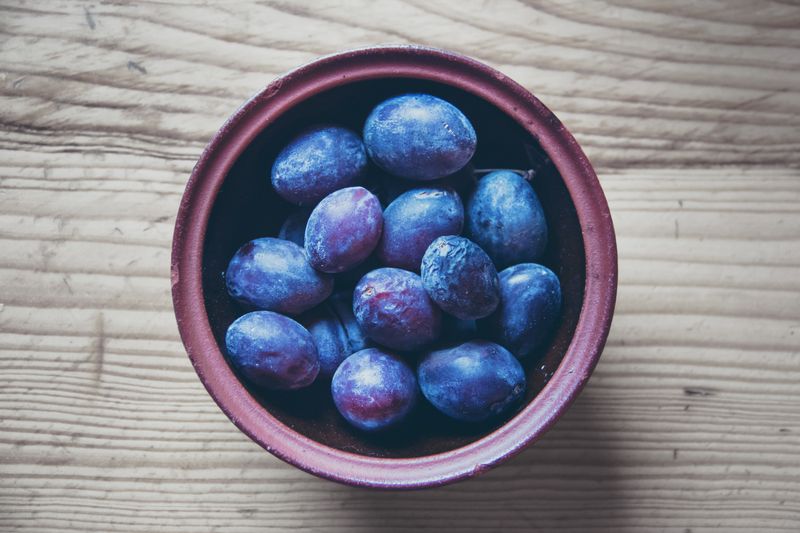
Can Babies Eat Plum?
By Sarah, founder of SowAndSpoon · Reviewed April 2026
Yes, safe from 6 months
Choking risk: low
Ripe plum flesh is soft and low risk. The skin can be slightly tough and slippery for young babies. Remove the pit and the skin for babies under 9 months. Avoid underripe plums, which are much firmer. The pit is a significant choking hazard and must be removed completely.
Not a common allergen
Babies can eat plum from 6 months. Plums are rich in vitamin C, vitamin K, potassium, and antioxidants (especially phenolic compounds in the skin). They also provide sorbitol, a natural sugar alcohol that has gentle laxative effects, making them useful for constipation.
Flavor guide
Ripe plums have a complex sweet-tart flavor with a rich, winey depth and a thin skin that carries a sharp tartness distinct from the sweeter flesh beneath. Cooking plums into a compote concentrates the sweetness, mellows the tartness, and produces a deep, jammy, ruby-colored sauce with a silky texture. They pair naturally with yogurt, oats, cinnamon, vanilla, cardamom, and pork.
How to Prepare Plum by Age
Peel, remove pit, and cut into spears. Ripe plums are soft enough without steaming. If firm, steam 3-5 minutes. Natural sorbitol content gently helps with baby constipation.
Serving ideas:
- -Peel a very ripe plum, remove the pit, and slice into thick finger-length wedges
- -Blend ripe peeled plum into a smooth puree, or mix with yogurt for color and sweetness
- -Cook down plum halves in a pan with a splash of water until soft and jammy, then blend or mash
Peeled or unpeeled soft wedges (European/prune plum skins are thin and fine). Remove the pit completely. Good pincer grip practice.
Serving ideas:
- -Peel, pit, and dice ripe plum into small pieces for self-feeding
- -Mix diced ripe plum into oatmeal or yogurt
- -Simmer plums into a simple compote to stir into anything
Raw wedges, cooked into compote, or dried as prunes. The pit must always be removed, it contains trace cyanogenic compounds.
Serving ideas:
- -Serve halved plums (skin on for toddlers with good chewing)
- -Make a simple plum sauce for drizzling over savory dishes like pork or chicken
- -Add sliced plum to cheese boards or oatmeal
Common questions
When can babies eat plums?
Babies can eat plums from 6 months old. Choose very ripe plums, remove the pit completely, and peel for babies under 9 months. Slice into thick wedges that baby can grip. Underripe plums are too firm and should be avoided.
Do plums help with baby constipation?
Yes. Plums contain sorbitol, a natural sugar alcohol with gentle laxative effects, plus fiber that supports digestion. A tablespoon or two of plum puree mixed into oatmeal or yogurt is a time-tested remedy for baby constipation. Prunes (dried plums) have the same effect in more concentrated form.
Do I need to peel plums for my baby?
For babies under 9 months, peel plums before serving. The skin can be tough and slippery, making it hard for young babies to manage. After 9 months, you can leave the skin on for babies who are chewing well. The skin contains concentrated antioxidants, so serving it when baby is ready is nutritionally worthwhile.
Can You Freeze Plum for Baby?
Halve, remove pit, freeze on a tray, then bag. Cook from frozen into compote or blend into smoothies. Not ideal as fresh finger food after thawing.
Batch prep tip
Halve and pit ripe plums, roast cut-side down at 375 degrees F until soft and juicy, blend or mash, and freeze in ice cube portions. Thaw to mix into oatmeal, yogurt, or use as a sauce. Keeps 4 months.
Plum Compote with Yogurt
From 6 monthsIngredients
- -3 ripe plums, peeled, pitted, and roughly chopped
- -2 tbsp water
- -Pinch of ground cinnamon
- -3 tbsp full-fat plain yogurt
Steps
- Combine plums, water, and cinnamon in a small saucepan over medium heat.
- Cook, stirring occasionally, for 8 to 10 minutes until plums are completely soft and sauce is jammy.
- Mash with a fork or blend smooth and cool to room temperature.
- Spoon over yogurt and swirl gently, or blend the compote into the yogurt.
- For 6-8 months, serve on a preloaded spoon. For 9 months and older, serve in a small bowl for self-feeding.
Yogurt is a dairy allergen. Introduce dairy separately before combining. Compote freezes well for up to 4 months.
Growing Plum at Home
Plums have natural laxative properties, helpful for babies prone to constipation. Remove pits completely before serving. Japanese plums (Santa Rosa, Methley) fruit earliest and suit most US climates. European/prune plums (Italian, French Prune) store and freeze better.
Ready in ~90-150 days from planting.
If your baby is constipated, plum puree (or prune puree) is a time-tested remedy that actually works due to the sorbitol and fiber content. A tablespoon or two in oatmeal is often enough to help.
Per AAP and WHO guidelines, most fruits, vegetables, and herbs can be introduced from 6 months as part of complementary feeding. Always consult your pediatrician before introducing new foods, especially allergens.