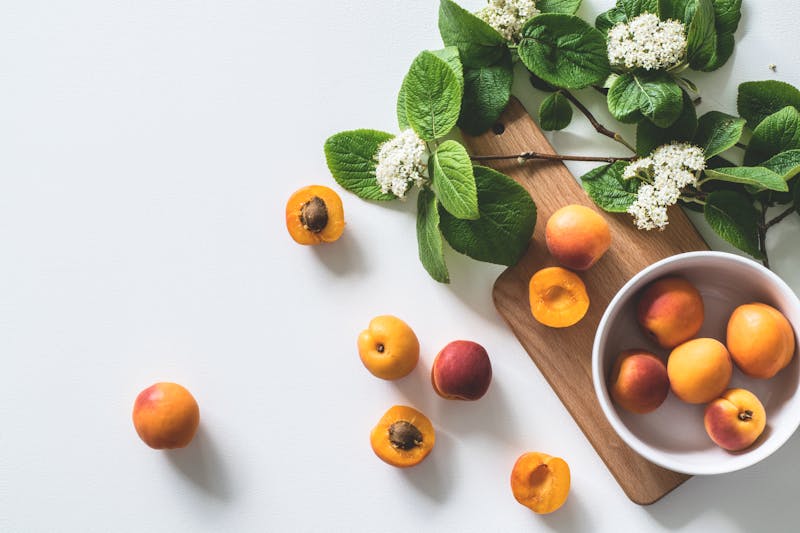
Can Babies Eat Peach?
By Sarah, founder of SowAndSpoon · Reviewed April 2026
Yes, safe from 6 months
Choking risk: low
Very ripe peach flesh is soft and low risk. The skin is the main concern for young babies as it can be tough and slippery. Peel for babies under 9 months. Always remove the pit entirely. Avoid underripe peaches, which are much firmer and harder to manage.
Not a common allergen
Babies can eat peach from 6 months. Peaches provide vitamin C, vitamin A, potassium, niacin, and fiber. The skin contains most of the antioxidants (phenolic compounds), but it can be tough for young babies. Ripe peaches are also a natural source of mild digestive-supporting compounds.
Flavor guide
A fully ripe peach has an intensely sweet, floral, honey-like flavor with a juicy, yielding flesh and a thin skin that turns slightly bitter when cooked. Cooking concentrates the sweetness and softens the flesh into a silky, jammy texture with a deeper, caramelized note. It pairs naturally with yogurt, vanilla, ginger, cardamom, almond (allergen intro), cinnamon, and raspberry.
How to Prepare Peach by Age
Peel by blanching in boiling water for 30 seconds, the skin slips right off. Halve, remove pit, cut into spears. Steam 3-5 minutes if the flesh is firm. Ripe peaches are soft enough without cooking.
Serving ideas:
- -Peel a very ripe peach, pit it, and slice into thick finger-length wedges
- -Blend peeled ripe peach into a smooth puree with a pinch of cardamom or ginger
- -Mash ripe peach flesh and mix into full-fat yogurt or oatmeal
Peeled soft cubes or wedges. Very ripe peaches need no cooking, the texture is naturally BLW-friendly.
Serving ideas:
- -Peel and dice ripe peach into small pieces for self-feeding
- -Blend frozen peach with yogurt and a banana for a creamy smoothie
- -Mix diced peach into cottage cheese or ricotta
Raw ripe wedges, smoothies, grilled peaches with butter and cinnamon, or sliced with a drizzle of honey (honey is safe after 12 months).
Serving ideas:
- -Serve peach slices with skin on (for toddlers with good chewing skills)
- -Grill peach halves until caramelized and serve with yogurt
- -Add sliced peach to oatmeal, pancakes, or alongside savory dishes like chicken
Can You Freeze Peach for Baby?
Peel, pit, and slice. Toss with a little lemon juice to prevent browning. Freeze on a tray, then bag. Use for smoothies, oatmeal toppings, or baked goods. Not ideal as fresh finger food after thawing.
Batch prep tip
Peel, pit, and slice ripe peaches. Freeze flat on a baking sheet, then bag. Use frozen directly in smoothies or thaw for mixing into oatmeal or yogurt. Keeps 6 months.
Ginger Peach Puree
From 6 monthsIngredients
- -2 ripe peaches, peeled, pitted, and sliced
- -1/4 tsp fresh ginger, finely grated
- -1 tbsp water
Steps
- Combine peach slices, ginger, and water in a small saucepan over medium-low heat.
- Cook, stirring occasionally, for 8 to 10 minutes until peaches are very soft and beginning to fall apart.
- Mash with a fork or blend smooth depending on baby's age and texture preference.
- Cool to room temperature before serving.
Very ripe peaches can be served raw and mashed at 6 months without cooking. Freeze in ice cube trays for up to 4 months.
Growing Peach at Home
Excellent BLW food, the natural curve of a peach half is easy for babies to grip and gnaw. Remove pit and any sharp pit fragments carefully. Clingstone varieties have firmer flesh; freestone varieties release the pit more easily. Most require two compatible varieties for good pollination.
Ready in ~90-150 days from planting.
Homegrown peaches are a completely different experience from store-bought. A tree-ripened peach has more sugar, more aroma, and better texture. Peaches are on the Environmental Working Group's Dirty Dozen list, so growing your own or choosing organic is a real advantage.
Per AAP and WHO guidelines, most fruits, vegetables, and herbs can be introduced from 6 months as part of complementary feeding. Always consult your pediatrician before introducing new foods, especially allergens.