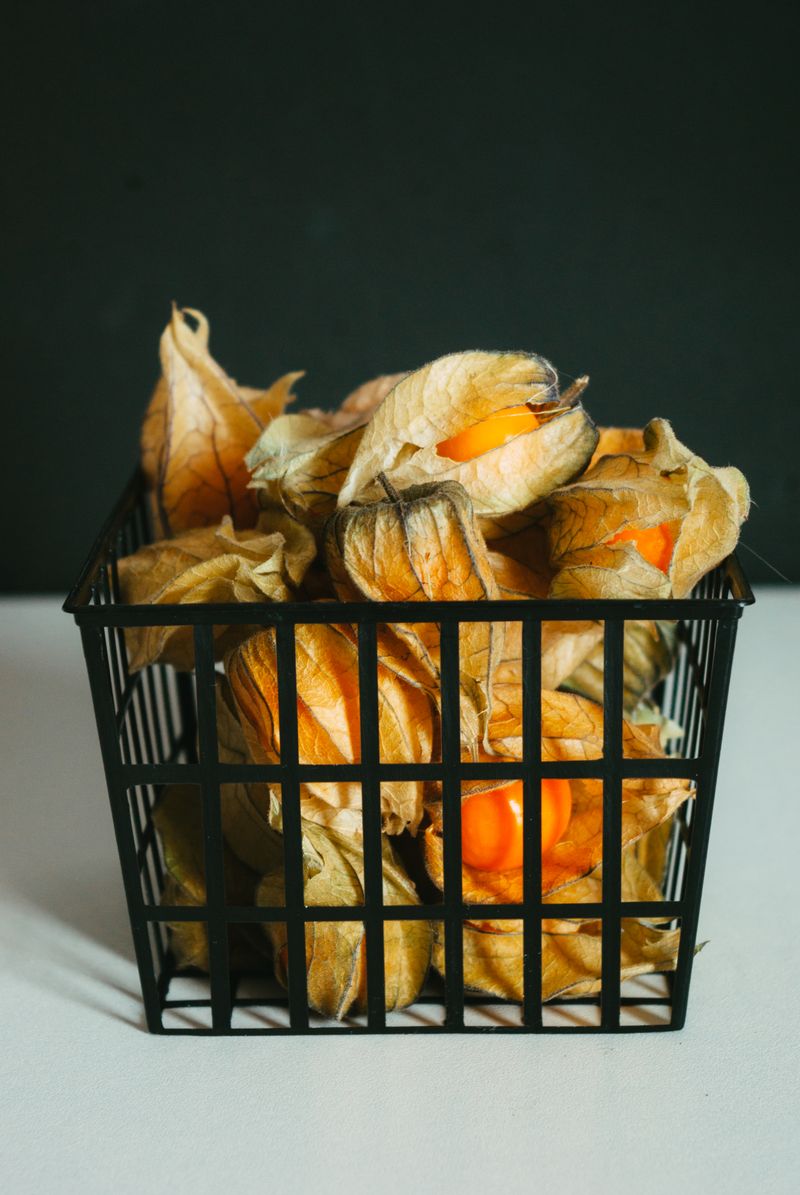
Can Babies Eat Ground Cherry?
By Sarah, founder of SowAndSpoon · Reviewed April 2026
Yes, safe from 9 months
Choking risk: medium
Ground cherries are round and small, similar in size to a large blueberry. Quarter lengthwise or halve and press flat for babies under 12 months. Their round shape poses the same choking risk as grapes. Remove the papery husk completely before serving.
Not a common allergen
Babies can eat ground cherry from 9 months. Ground cherries provide vitamin C, niacin (vitamin B3), phosphorus, and antioxidants including withanolides. Their papery husk is not edible, but the golden fruit inside is sweet-tart and nutritious.
Flavor guide
Ground cherries (Physalis pruinosa) taste like a cross between pineapple, vanilla, and a mild tomatillo, with honey-sweet tropical notes and just enough tartness to keep them bright. The thin skin is soft and juicy when ripe, with a flavor more complex than any single fruit. They pair naturally with yogurt, oatmeal, banana, lemon, mango, and mild soft cheese.
How to Prepare Ground Cherry by Age
Not recommended under 9 months, the whole fruit is small and round, posing a choking risk. If offering before 9 months, mash thoroughly and mix into yogurt or oatmeal only.
Serving ideas:
- -Quarter ground cherries lengthwise and mash into oatmeal or yogurt
- -Blend into a smooth sauce and mix into sweet potato or grain porridge
- -Halve and press flat before serving with full-fat yogurt
Halve each berry before serving. They pop open easily. The sweet pineapple-vanilla flavor makes them an instant favorite.
Serving ideas:
- -Halve for self-feeding practice alongside soft cheese or yogurt
- -Mix halved ground cherries into cottage cheese
- -Cook down briefly into a quick jam-like sauce to stir into oatmeal
Whole berries for confident chewers. Great as a snack, in salads, baked into muffins, or cooked into jam.
Serving ideas:
- -Serve halved as a snack or in fruit salads
- -Make a simple salsa with diced ground cherry, lime, and cilantro
- -Add to baked goods like muffins for a tropical-sweet note
Common questions
Are ground cherries safe for babies?
Yes, with proper preparation. Ground cherries are safe for babies from 6 months when the papery husk is completely removed and the fruit is halved or quartered. Whole ground cherries are a choking hazard because of their round, slippery shape, similar to grapes or cherry tomatoes. Always cut in half and press each half flat before serving to babies under 12 months.
Are ground cherries the same as tomatillos?
Ground cherries (Physalis pruinosa) and tomatillos (Physalis philadelphica) are relatives in the same plant family, but they are different. Ground cherries are small, golden, and sweet with a tropical flavor. Tomatillos are larger, green, and tart. Both have papery husks that must be removed before eating. Ground cherries are eaten as a fruit; tomatillos are used as a savory ingredient.
Do I need to remove the husk from ground cherries before feeding baby?
Yes, always. The papery husk surrounding each ground cherry is not edible and must be completely removed before serving. Peel the husk off, rinse the fruit (it may feel slightly sticky), then cut in half before serving. The husk is thin and papery and could be a choking hazard if accidentally left on.
Can You Freeze Ground Cherry for Baby?
Remove husks, freeze whole on a tray, then bag. Use in smoothies, jam, or baked goods from frozen. Halve when thawed for younger eaters.
Batch prep tip
Ground cherries can be cooked down into a thick sauce or jam. Simmer with a squeeze of lemon and freeze in small portions. Keeps 3 months. Perfect stirred into oatmeal or swirled into yogurt.
Ground Cherry and Banana Oatmeal
From 9 monthsIngredients
- -1/3 cup rolled oats
- -3/4 cup water
- -6 ground cherries, husks removed and halved
- -1/2 ripe banana, mashed
Steps
- Remove papery husks from all ground cherries and discard. Rinse fruit and halve each one.
- Cook oats with water in a small saucepan over medium heat for 4 to 5 minutes, stirring frequently, until thick and tender.
- Remove from heat and stir in mashed banana.
- Top with halved ground cherries.
- For 9-11 months, serve as spoonfuls with halved cherries alongside for self-feeding. Press each cherry half flat before serving to reduce round shape.
Never serve whole ground cherries to babies. Always halve and press flat before serving to remove the choking risk from their round shape.
Growing Ground Cherry at Home
Also called cape gooseberry or husk cherry (Physalis pruinosa). Grows just like a tomato, same family, same care, same transplanting window. Self-seeds aggressively; one plant produces hundreds of fruits. Ripe when the papery husk turns brown/tan and the berry inside is golden-yellow with a sweet honey-vanilla flavor.
Ready in ~70-80 days from planting.
Ground cherries are an underrated garden crop that self-seeds prolifically once established. The husks are nature's natural packaging and the fruit inside stays fresh much longer than unprotected berries. Kids love unwrapping the papery husks.
Per AAP and WHO guidelines, most fruits, vegetables, and herbs can be introduced from 6 months as part of complementary feeding. Always consult your pediatrician before introducing new foods, especially allergens.